Showing posts with label experiment. Show all posts

Tuesday, 4 September 2012

What Constitutes Success?

World Touring Car Championship 2011 Race of Japan: Tom Coronel (ROAL Motorsport) celebrating the victory in the race 2. I've been thinking about the goals of this experiment and how I measure those goals. Firstly, the goal. Clearly the ideal would be to cure my type 2 diabetes. However, cure is a loaded word. Lots of people have claimed to have cured type 2. Every other day my Google Alerts box gets another so-called cure. Some  are studies by professional scientists that have been blown out of proportion by the media. Scientist says, eating dust seems to show, in a tiny uncontrolled study, that insulin resistance was lowered by an almost statistically insignificant amount. The newspapers turn this into, "Dust Miracle Cure for Diabetes!" (not a typo - they would drop the type 2 part as well).

Another bunch of alerts are snake oil salespeople. Perhaps I'm a cynic but I'm unconvinced by a magical diabetes cure that couldn't describe on page one of an overly colourful dedicated web site, but could be explained for just $19.95. If I had discovered that cure, I might not try to get a few pounds or dollars for it. Instead I might subject it to scientific scrutiny via the peer review process. I might not get my $20 a sale for a year but I may well get a Nobel prize, a patent and become a hero for millions of people with this terrible disease.

Anyway, the goals...

I'll see this experiment as an amazing success if my blood sugars normalise and I can eat "normally" again. That means that I can eat carbohydrates without spiking my blood sugar over 7.0mmol/l (126mg/dL). Will I go back to eating high carbohydrate food? Probably not. I wouldn't mind being able to go out for a meal once a month and not have to hunt around the menu for the one (if there is one) low-carb, vegetarian meal. An occasional relaxation of the low-carb diet, rather than giving up on it.

Would that be a cure? Maybe, maybe not. Talking about a cure is controversial to many. Some would say that normalising my blood sugar and insulin response would not be a cure, but would be remission or reversal of diabetes. The expectation is that going back to my old style of eating would reverse the reversal and I would become diabetic again. This is probably true and is the reason that I will never become a high carbohydrate eater again.

I suppose what I'm hoping for (and I'm not that hopeful to be honest) is something better than being in a position of managing my diabetes, along with the daily, nay hourly, work that this entails.

Friday, 31 August 2012

What am I Planning to Eat?

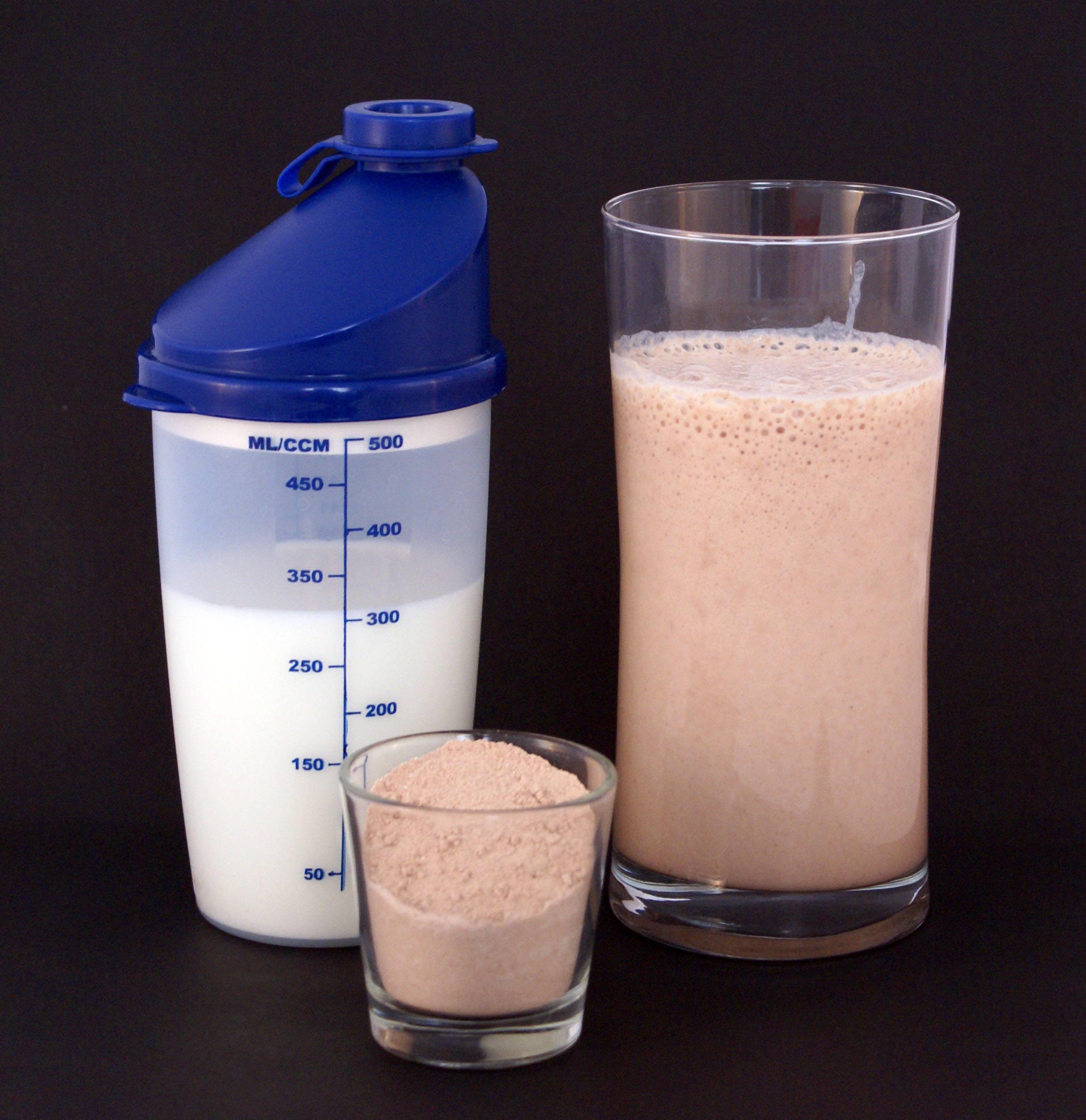
A chocolate-flavored multi-protein nutritional supplement milkshake (right), consisting of circa 25g protein powder (center) and 300ml milk (left).Now that's a good question.

In the original study, the participants drank shakes that provided nutritional requirements and 510 calories. The remaining 90 calories came from vegetables. I'm going to use some shakes and vegetables but probably throw in the odd egg or handful of nuts too. I may even (gasp!) go as high as 700 calories a day occasionally. I'll be drinking lots of water and zero-calorie drinks too. I'll also be supplementing with vitamins and minerals.

Should You Do This?

Just for the record, this is my body I'm experimenting with and I believe that I am free to do so. I'm not saying that any other type 2 diabetics should try this experiment. You almost certainly shouldn't and if you are thinking about it, talk it over with your doctor (who should talk you out of it).

I'm not a medical practitioner (I'm a software developer). Don't copy what I do. You have been warned. I take no responsibility for anyone as stupid as me doing things as stupid as the things I do.

Starting Point

Traffic lights, SarajevoI'm starting this experiment from a pretty good place. I was diagnosed with T2DM in January of this year, around seven months ago. I'd fainted at work and "for insurance purposes" (it's never because they care, is it?) I was taken to the hospital for a check-up. During the quick check I had a finger-prick blood glucose check. The result was 12.1mmol/l, which is about 218 for the Americans amongst you. Not good, especially as I hadn't eaten in about five hours. An eyebrow was raised when the nurse asked me if I had diabetes... "Not that I know of."

The following day I popped to see my GP who organised a fasting blood glucose test. This came back as 8.1mmol/l (146mg/dL). He suggested a glucose tolerance test, which confirmed that I had type 2 diabetes. At the time it didn't mean a great deal to me as I didn't know anyone else with diabetes. Well, I did, but I didn't know and they didn't know that they had it.

Since that time I've been controlling my blood glucose levels pretty well with a low carbohydrate, vegetarian diet. I eat plenty of non-starchy vegetables, nuts, eggs, cheese, oils and the like. I don't eat much in the way of sugar, though I have the odd treat. I eat no potatoes or other starchy vegetables, rice or pasta, and very little bread. Perhaps one slice of wholemeal bread every couple of weeks.

This has given be good results. My last HBA1C was 4.8%, which is within the normal range. My fasting blood glucose is between 5.0 and 5.8mmol/l (90 - 104mg/dL), which isn't too bad. My two hour post-prandial readings are almost always below 6.0mmol/l (108mg/dL) and one hour values are usually below 7.0mmol/l (136mg/dL). There are other diabetics I talk with who get better numbers so I still can improve. At the moment I take no medications, controlling through diet and daily exercise only.

One thing I need to keep an eye on during the experiment is my weight. I currently weigh 11stones (154 pounds) which is about right for my 5' 8" height; by body fat percentage is 20.1% and BMI is 23.4. I don't want to lose too much weight. I'm also going to be watching my blood glucose of course. If my weight goes below 10 stone (140 pounds), my blood glucose becomes too low, especially if I have hypos, or if I become unable to exercise, the experiment will end prematurely.

In the Beginning

Insulin pump with infusion set
My name is Richard and I'm a diabetic. It seems almost like an admission of guilt, based upon the way some people talk about, and write about, type 2 diabetes. Many people think that all people who have type 2 diabetes caused it themselves by overeating. Perhaps there's a modicum of truth in that but it wouldn't account for the thin type 2 diabetics or the fat non-diabetics. Anyway, I'm not one to judge. What I am is someone who doesn't enjoy being diabetic.

Now, a lot of people, including some very clever people who are much more knowledgeable about the condition than I am, say type 2 diabetes (let's call it T2DM for short) cannot be cured. They may well be right but that doesn't stop me from looking for a way to cure, reverse, put into remission or just remove the complications associated with my T2DM. Let's put it this way: when I've tried everything and I still can't eat a pavlova or drink a Red Bull without soaring blood glucose levels, then I'll admit they are right and I'll give up.

So, I booked a two week holiday from work and decided to use the time doing some work around the house and performing an experiment with my own body. I decided that for the next two weeks, and perhaps longer, I will attempt to live on 600 calories per day. Why 600 calories? Well, that's the number that the people on a small scale study in the UK were given. They normalised their blood glucose levels in a week and a reasonable number of them became diabetes-free after eight weeks. Will it work for me? Will I be able to keep it up? Who knows, but there's one way to find out.

I start tomorrow, wish me luck!